

Pre-action sprinkler systems
A sprinkler grid that stays dry until detection and a head both agree there is a fire. For rooms where an accidental discharge would cost more than the fire.
- Scope
- Survey → commissioning → AMC
- Practice
- IS 15105 · NBC 2016 Pt.4
- Typical use
- Data halls, archives, museums
Two things have to happen before any water moves
In an ordinary wet system the pipework above the ceiling is full of water at all times, and a knocked-off head empties it onto whatever is below. A pre-action system holds that water back at a valve in the plant room and keeps the grid dry. Detection in the room opens the valve; the sprinkler head still has to reach its own temperature before anything discharges.
That double interlock is the whole point. A damaged head on a dry grid releases air, not water — the panel reports a low-air fault and someone goes and looks. It is the arrangement for rooms where the contents are the reason the building exists: data halls, record rooms, control rooms, museum stores and switchgear rooms.
The design is a sprinkler design plus a detection design, and the two have to be commissioned together. We prove the releasing sequence end to end — detector to panel to solenoid to valve — with the grid isolated, then again with air pressure restored, and hand over the cause-and-effect matrix that the release logic was set against.
What the installation is built from
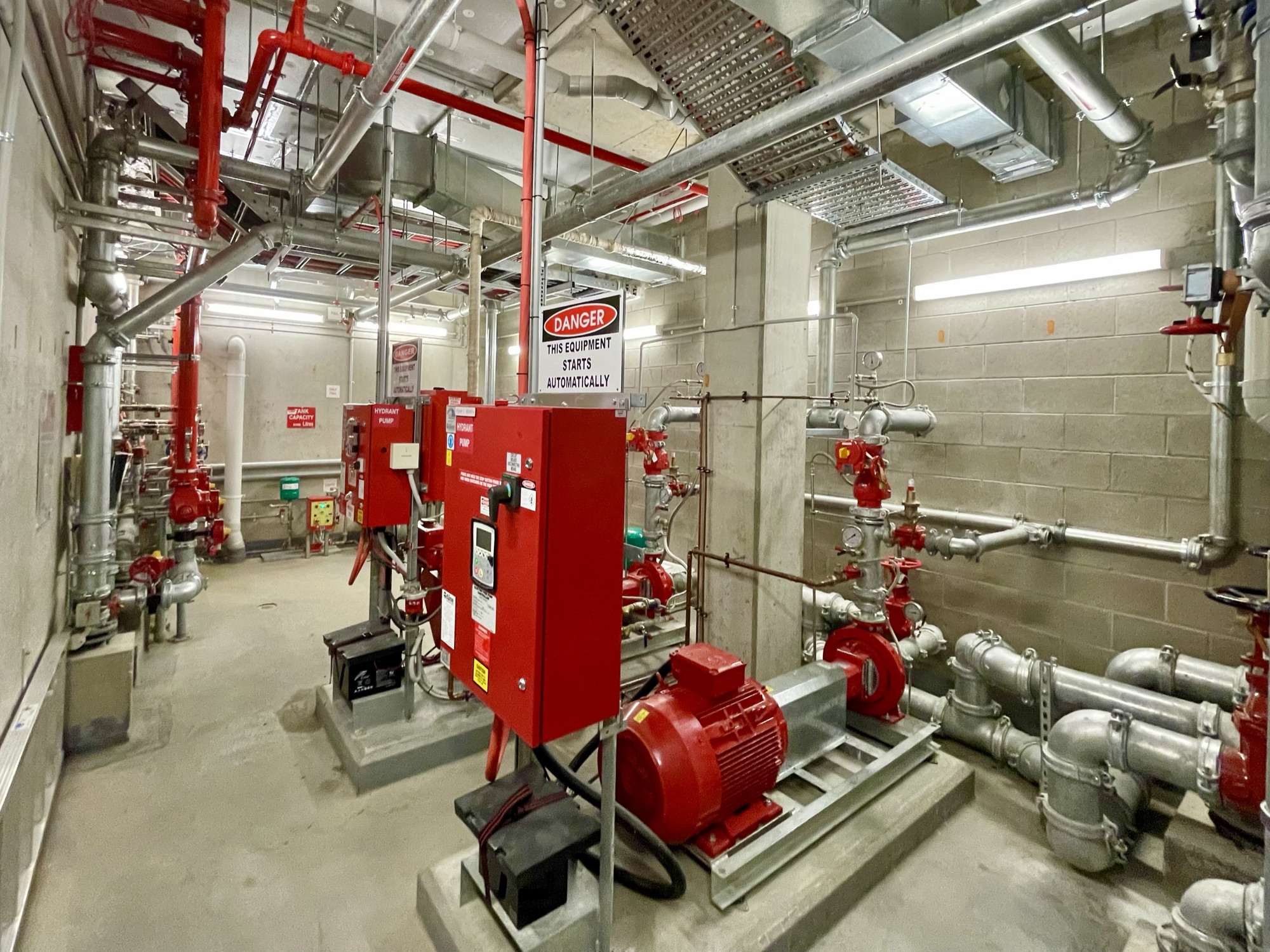
A pre-action installation is a sprinkler grid, a detection system and a releasing valve that only opens when both say so.
Tell us about the project
Send the drawings or the BOQ and we will price it line by line. Most enquiries start with a site visit, because the site decides the system — not the catalogue.