

Clean-agent flooding with Novec 1230
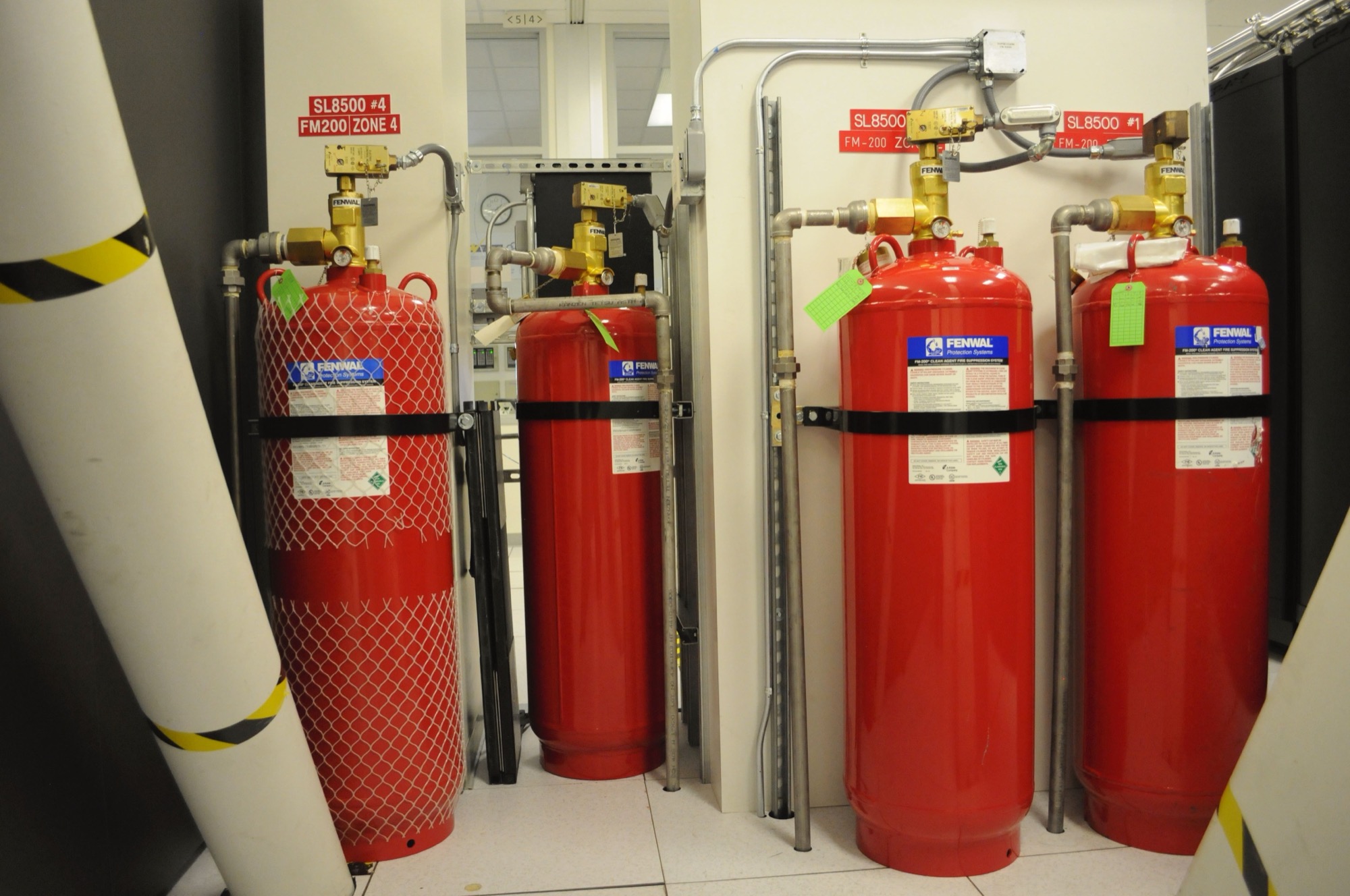
Suppression for occupied electronics rooms — it puts the fire out and leaves no residue, no water and nothing to clean off a server.
- Scope
- Survey → commissioning → AMC
- Practice
- ISO 14520 · NFPA 2001
- Typical use
- Server rooms, control rooms
The system you can put in a room people work in
A clean agent absorbs heat rather than displacing oxygen, so the design concentration for a fire is well below the level at which it affects the people in the room. That is the difference between this and a CO₂ system, and it is why clean agent is the normal answer for a server room, a control room or a UPS room that somebody is sitting in.
It discharges as a gas, disperses through the enclosure in about ten seconds and leaves nothing behind — no residue, no corrosive by-product, no water. After a discharge you ventilate the room and go back to work; the equipment that was running is still running. Against a water or powder discharge in the same room, that is usually the entire business case.
Everything then depends on the enclosure holding the gas for long enough. We survey the room for leakage paths first — raised floor voids, ceiling plenums, cable transits, door undercuts — and design the quantity, the nozzle layout and the pressure relief against the actual volume. Commissioning includes the release sequence, the interlocks and the room integrity check, and the discharge calculation is handed over with the system.
What the installation is built from
The agent is only part of it. What makes a clean-agent system work is the enclosure, the nozzle layout and the release logic.
Tell us about the project
Send the drawings or the BOQ and we will price it line by line. Most enquiries start with a site visit, because the site decides the system — not the catalogue.